NarrowGate Replay Evidence Revalidation:时间、量纲与因果时钟修复后,旧结论还剩什么
回测中的时间与量纲不是显示细节。它们决定策略何时看见信息、订单何时生效,以及哪笔成交进入账户。修复这些定义以后,旧结果需要按受影响的执行路径重新判断;保留历史研究过程,不等于保留已经失效的精确收益。
延迟怎样进入策略比较
以下讨论源于 2026-09-05 的环境复验设计,描述当时的方法与证据范围,不是今天的运行进度。
当时的 B0(不增加候选动作的对照策略)与候选尚无该环境下的完整配对经济结果。下面的执行设计不构成新的收益证据。
环境复验要回答的是:在已经测量到的延迟环境中,这一次首次开仓、再次增仓或继续保留挂单,相比等待是否值得? NarrowGate 并非没有事前控制:决策可见的毒性、方向、收益预测和 weighted-mid proxy 可以影响报价;成交后的冷却、markout 反馈和风险退出也能保护下一次决策。尚未充分闭合的是从信号到可执行动作,再到完整 库存生命周期 终点增量价值的证据链。
不是从零开始,也不是把旧失败重新命名
公开研究已经检验过 SELL first-opener 的条件价值、首次增仓的决策可见负价值,以及 ADD NOW 相对 WAIT ONE EXTERNAL EPOCH。这些冻结身份没有证明稳定的选择增益。因此,正确说法是“选择能力尚未验证”,不是“从未研究事前选择”。用未来的 库存生命周期 结果构造训练标签也不等于事后动作;关键是输入何时可见、动作何时生效,以及训练是否只使用过去的数据。
旧关闭结论继续约束原候选与原面板;新的延迟环境只提供明确标注的环境迁移复验理由,不自动开启旧 holdout,不允许一边观察新结果一边改阈值。复验未通过时,不把失败解释成冷却常数已经最优,也不据此否定所有不同的状态或动作模型。
对照组需要相同的执行环境
延迟不能压成一个额外常数,也不能把多个阶段的 p99 相加。需要分别表示源消息产生与到达、特征完成、决策计算、GLOBAL FIFO 请求等待、交易所生效,以及 HTTP 返回与私有回调可见时间。Depth 总年龄还包含源更新间隔和快照调度等待,不能整段再作为网络延迟采样,否则会重复计算等待。不能从平均 RTT 或 RTT/2 推断不可观测的交易所生效时刻。
本轮可取得的原始运维样本保存在私有证据库,不随公共仓库分发。短窗口的百级请求样本只能提供有限的经验分布和实现诊断,不能冒充长期稳定的尾延迟分布。无法识别的时刻保留为显式假设及敏感性范围;原始尾部不因数字难看而默认截去。本轮没有可公开声称的完整 market-event→exchange-effective 实测 p99。
两臂共享行情交付和外部网络扰动的生成规则,能够对应的请求使用相同 keyed draws;候选改变请求数量以后,各自的 FIFO 等待、订单队列、成交、库存和 库存生命周期 必须独立演化。不能强行给两臂相同的最终等待时间,也不能把 B0 的成交路径缓存给候选。Python/C++ 共享内核一致不等于完整运行机制一致;缺少当前机制的 backend 不用于出具当前环境的经济结论。
实现方面,确定 native 字段、统一加载边界和日志复用已验证模型 metadata 的调整见源码修复提交;root-private 部署环境文件的受限元数据读取见部署修复提交。这些是工程变更,不构成延迟收益或策略收益证明;新的异步生命周期与分源可见性覆盖仍须由完整 replay 验证,不能用公共模板或旧 40/50 日金额代替实际 B0。
用三个决策面组织有限的复验
| 决策面 | 要比较什么 | 必须保持的边界 |
|---|---|---|
| 首次承担风险 | 当前方向、价格和数量的 opener 相对等待 | BUY/SELL 分开;等待期限和重新进入规则在结果前确定 |
| 挂单继续暴露 | 保留队列位置相对撤单、等待终态再重入 | 撤单真正生效前仍可成交;unknown 不释放 ownership |
| 再次增仓 | 基线允许的 ADD 相对继续等待 | 市场恢复与计时到期不是同一对象;减仓和风险退出不受选择器阻挡 |
共同目标是固定后续保护策略下的增量价值,而不是单独预测某笔成交后的涨跌:
这里的终点收益来自完整现金流和剩余库存计价;不把同一个 库存生命周期 的终点 PnL 重复算给每个决策。历史价格档数据不能恢复全部订单级队列身份,queue/fill 仍须作为模型假设报告,而不是要求模拟成交与 live 逐笔相同。
执行顺序是:先补齐当前 B0 与 no-op 对照;再重做 BUY/SELL、opener/add/reducing 的损失归因;随后用现有信号和少量预先确定的动作检验事前选择的独立增益。SELL 增仓过滤等候选先经过支持和机制检查,不先扩展成新的大参数网格。此前的 deadline-floor 和细分 cooldown 暂不作为优先调参对象;它们保留原定义,供后续有明确增量问题时复验。
第一轮固定相同的成交后冷却、markout、库存限制和退出规则,避免“增加事前选择”和“撤掉事后保护”混成一个处理。只有事前机制在完整配对路径中显示稳定增益,才逐项做事后保护的消融。必须同时报告分侧成交、maker 毛收益、taker 与费用、terminal MTM、tail、库存 MAE、修复时间和 quote uptime;少成交或短期 markout 改善本身不能证明策略更好。
截至该历史设计阶段,工程进展尚未形成新的完整经济结果。 旧临时交付包未找回时,任务记录只能恢复研究线索,不能替代原始报告、补丁与输出;不会把残缺旧结果拼成新 B0,也不新增 live shadow 来代替离线复验。
1. 修复基础设施与重验旧证据是一项研究
时间单位、方差 ABI、feature-ready clock、timer event、commission 与 库存生命周期 accounting 的修复,不只是工程 housekeeping;它们会改变事件先后、订单生命周期和两个策略 arm 的分叉方式。因此需要进一步核对历史证据:先说明 identity 为什么变,再判断旧结论中哪些方向仍安全、哪些精确数字必须撤回。
reservation-price 风险项提供了最直观的量纲检查:
这里 $q$、$\gamma$、绝对价格方差与风险期限必须闭合;60 个 1 秒观测构造的短期方差 lookback,不等于固定 $H=1s$ 就经济正确。类似地,replay 中一个缺失 timer event 会改变 cancel、fill 与 inventory transition 的先后,错误不再是两 arm 可相消的共同常数。
2. 研究阶段与证据状态
| 阶段 | 它真正问什么 | 结论/权限 |
|---|---|---|
| Time/unit/causal-clock repair | 单位、窗口和事件时钟怎样改变完整订单路径? | 缺陷修复;旧 replay identity 失效 |
| Historical evidence revalidation | 修复后哪些旧结论还能保留? | no-promotion 方向保留;旧 PnL/winner/rankings 撤回 |
3. Time/unit/causal-clock repair
TL;DR:单位、feature-ready clock 或 timer event 错一个,改变的不只是指标,而是整条订单生命周期
maker replay 常被误认为“把历史 trades 依次送进策略”。NarrowGate 的系统审计发现,真实 replay 还需要正确处理 variance unit、quote horizon、feature bucket visibility、cross-day warmup、markout observation、partial-fill quantity、book/timer events、wall-clock duration、calendar physical unit、commission asset、tick/lot 与 terminal equity。
早期系统把一秒 absolute-price variance 的平方根同时乘 inventory 和 mid,单位错误;使用 per-second variance却没有明确 integration horizon;把左标 10 秒 feature bucket在 bucket开始暴露,形成 lookahead;主要靠 trades推进 quote timers,导致 sparse periods中的 TTL、cooldown、requote、stale-book、markout 与 inventory-time停滞;又用“有 trade 的 unique seconds”和 event count估计 day exposure与 capacity,混淆事件与时间。
修复后的 replay使用 causal merged stream:individual execution trades、historical BBO/L2 state changes 与固定 100ms timer deadlines。合成 book/timer rows可以推进状态,却不能消费 queue或制造 fill。一个 real-data 10分钟 parity window中,Python/C++ 都产生 2 fills、9,461 clock events、101 requotes,PnL差仅 $2.2\times10^{-15}$ USDC。
修复的非线性影响也很直观:同一 full-day public-template diagnostic 从 legacy trade clock的178 fills / $-0.97$ USDC变为 merged clock的184 fills / $+1.18$ USDC。这不是 alpha result,而是证明旧 evidence不能继续引用。
后续 time/unit contract又修复 calendar microsecond→1970 bug、commission asset、daily PnL rollover、post-fill volatility、tick/lot、bar ns/ms和标签语义,形成 causal-v7。42 日 formal replay完成 776,048 order rows;相对旧 v6,raw PnL改变 $-3.7363$ USDC、fills $+88$、absolute inventory time $+205.02$ BTC-hours。13-head bundle虽完整,strict ML A/B的 raw/terminal evidence仍未通过,inference保持 disabled。
因此 SYS 项目的最终结论是:defects repaired;old replay evidence superseded;successor model/action still no promotion。正确性修复是研究的必要条件,不是策略收益。
本文只讨论公开 system-engineering evidence,不构成交易建议。图中的 K 线、event stream 与订单状态为合成机制图,不是实盘。
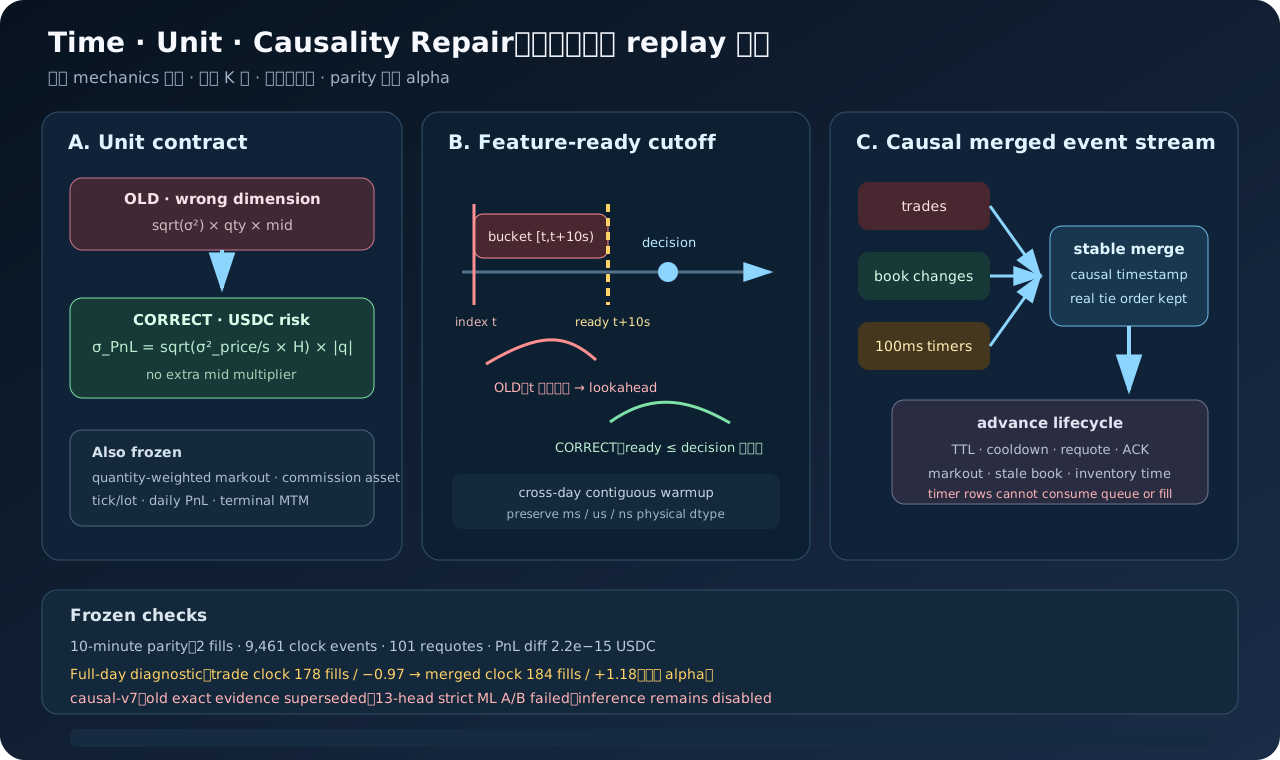
图 1:价格 variance 先按 horizon积分并乘 BTC quantity;feature 只能在 bucket end ready;trades、book changes 与 100ms timers共同推进生命周期。任何一层错误都会改变 fills、inventory与 terminal value。
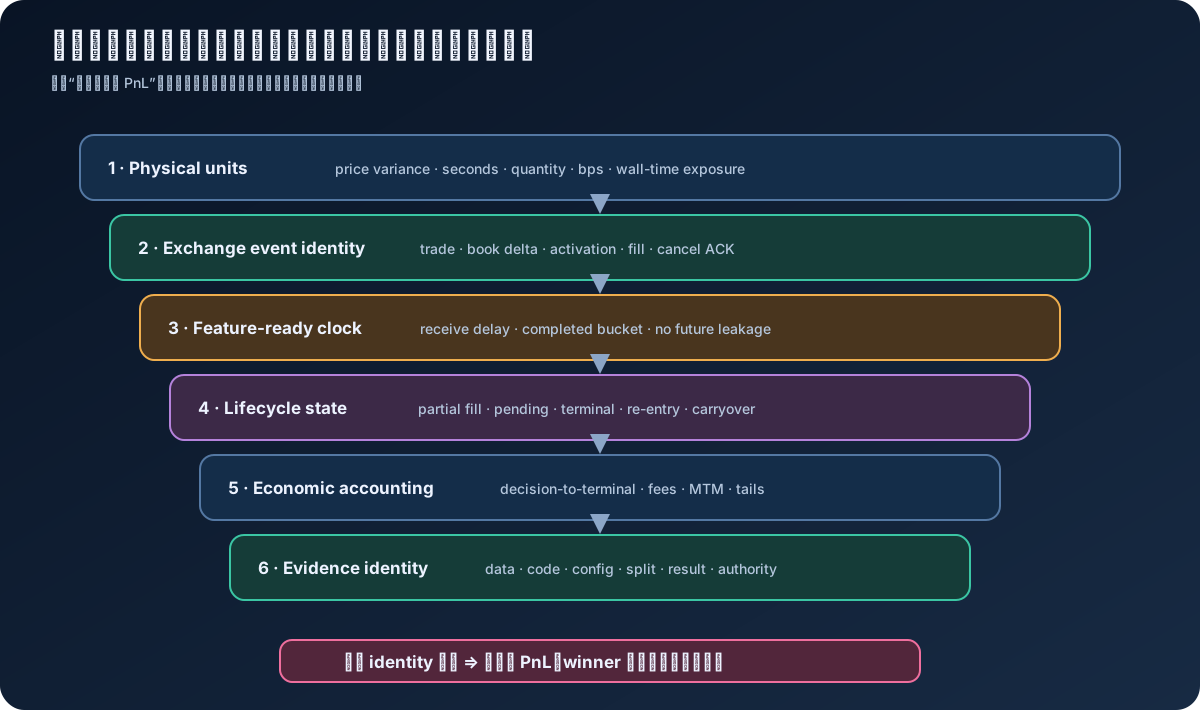
图 2:修复按依赖顺序向上推进。底层单位和时间不成立时,上层Python/C++ parity只会稳定地复现同一个错误;event与state正确后,才轮到action economics。
1. 为什么这些修复是一项研究,而不是九个小 bug
这些缺陷看似分散:一个公式多乘 mid、一个 timestamp单位错、一个 timer没有 tick、一个 commission asset丢失。但它们都回答同一个系统研究问题:历史 replay 是否在正确单位、正确可见时间和完整 wall clock 上重现策略可执行的状态转移?
研究 identity 的终点也一致:建立一个 frozen formal replay contract,让 Python/C++ 对相同 causal inputs锁步,再看修复后的模型或动作是否通过 promotion gate。各项实现修正属于必要条件,不是独立的收益增量。
2. Variance unit:不要把价格波动再乘一次 mid
若 $\sigma_p^2$ 是一秒 absolute-price variance,单位为
则 horizon $H$、inventory quantity $q$ 的 PnL volatility为
单位检查:
旧实现又乘 mid-price,会多出 USDC/BTC,结果不再是 USDC。这个错误会扭曲 circuit breaker、exit urgency 与 quote risk,而不是只让 report label难看。
quote_horizon_s 与 pnl_volatility_horizon_s 也必须分开。per-second variance没有天然的“10 秒风险”;当前 public quote horizon明确为 1 秒,PnL risk horizon是另一项冻结参数,不能从 quote horizon推断。
ML-OFF 时 neutral prediction令 vol_10s=0,不能拿 dimensionless realized-return volatility替换 absolute-price variance。Post-fill接口则明确接收 volatility_bps,live/replay按同一公式转换。
2.1 一个量纲算例
假设absolute-price volatility为 $20\ \mathrm{USDC/BTC}/\sqrt{s}$,风险horizon为10秒,inventory为$0.01\ BTC$。正确的PnL标准差是
若再乘一个60,000 USDC/BTC的mid,数值会膨胀到约37,947,而且单位变成$\mathrm{USDC}^2/\mathrm{BTC}$,已经不是损益。这个例子说明“vol是价格还是收益”“variance按秒还是按窗口”“quantity以BTC还是订单单位计”必须作为接口类型,而不能留给参数调优吸收。
同理,若输入已经是10秒累计variance,再乘$H=10$会重复积分;若输入是dimensionless return variance,则必须先乘价格尺度才能转成absolute-price风险。数值相近不能替代量纲闭合。
3. Feature visibility:index time 不是 ready time
左标 10 秒 row at $t$ 覆盖区间 $[t,t+10s)$。策略直到 bucket结束才可能知道完整统计,因此
replay lookup必须用 $t_{ready}$,不是 raw index。旧 cache在 timestamp semantics变化后整体失效,不能只改 metadata让历史 predictions看起来 causal。
同样规则适用于 five-minute metrics、external joins 与 parent aggregate trades。一个 child trade在 exchange time已发生,不代表 policy-visible flow在 parent message ready前可用。
forward labels也必须冻结半开区间 $[t,t+h)$,排除恰在 $t+h$开始的 bar。历史兼容名 label_ret_10s/label_dir_10s 实际可能表示 decision到 fill最多 $h$,fill后再 markout $h$,总 span在 $h$到$2h$之间;metadata必须说出真实语义。
4. Cross-day warmup 与 calendar physical unit
rolling 6h/24h/7d state不能在 UTC midnight清零。修复后的 daily feature generation最多读取七个 immediately contiguous prior days作 causal warmup,遇到第一个缺日即停止;external joins与 labels在 warmup后 slice回 target day,未来日不能进入目标。
Parquet datetime index可能保存为 ms、us或ns。旧 converter先把 datetime cast成数字,再用 magnitude阈值猜单位;microseconds被当作 nanoseconds,十九个 training days的 calendar/session features落到1970年。
修复先保留 physical dtype,再按 seconds/milliseconds/microseconds/nanoseconds显式转换;calendar tables超出 declared local-year support时 fail fast。即使 validation/test没有这个特定 bug,training distribution已改变,旧 model也不能继续 authoritative。
5. Merged causal event clock:没有 trade 时,时间仍在走
旧 Python/C++ tick loops主要在 execution trade到来时推进 quote timer。若市场数秒没有 trade,现实中的 TTL、cooldown、cancel ACK deadline、requote、stale-book guard与 pending markout仍会到期,旧 replay却像时间停止。
formal replay的新 stream为
按 causal timestamp稳定合并。synthetic book/timer row携带最新可见 execution price、quantity zero,可以推进 state machine和 inventory-time integral;它不能 consume queue、create fill或制造 inferred touch。real trades同毫秒保留 stable input order。
formal mode拒绝 trade-only clock,并要求 positive timer interval。exploratory mode可以显式重现 legacy diagnostic,但没有 promotion eligibility。
5.1 一条无成交区间里的事件序列
设订单在12:00:00.000激活,TTL为5秒,requote interval为1秒,12:00:00.400之后直到12:00:07.000没有execution trade,但BBO在12:00:02.300变化。现实系统仍会在每个timer edge检查quote,在12:00:02.300读取新book,并最迟于12:00:05.000触发expiry/cancel逻辑。
trade-only replay却会把状态冻结到12:00:07.000:订单虚构地多暴露两秒,cooldown与markout也同时停摆;若12:00:07的trade触及旧价,replay甚至可能给一张现实中已经撤掉的订单记fill。merged stream并非为了制造更多event,而是为了让“时间经过”本身成为可观测状态转移。
synthetic timer row的quantity为零这一约束非常关键。若为了推进clock而复制上一笔trade quantity,它会同时消耗queue;若timer row可以触发touch,它会凭空制造fill。clock completeness与market-event authority必须是两个独立字段。
6. Wall time、exposure 与 capacity
旧 day exposure使用
这衡量 activity coverage,不是 replay elapsed time。一个完整但稀疏的 UTC day可能被报成“半天”,fills/day随之虚高。
旧 PnL-curve capacity又用 event_count / interval_ms,把无量纲 count除以 milliseconds当成时间。修复后 duration、库存生命周期 age、inventory time与 capacity全部从 merged stream的 elapsed milliseconds推导。
inventory exposure按 wall clock积分:
它不能由“有 trade的秒数”近似。
7. Markout、partial fills 与 terminal equity
canonical order-level markout按 fill quantity加权:
若预测的是 per-BTC EV,total USDC为
不能 event-weight partial fills,也不能把 USDC/BTC price difference直接相加成 USDC。
maker-signed markout在 BUY/SELL都以 favorable为正;旧 audit scorer对 SELL double sign flip的结果撤回。fixed-horizon midpoint必须来自目标时刻可见 BBO/L2,并记录 actual observation与 age,不能取未来第一笔 trade冒充 mid。
terminal equity为
不在窗口末尾虚构 taker close。commission asset必须保留:quote/settlement commission直接计入,base-asset commission按 fill price转换;未知 nonzero asset让策略停止继续 quote,而不是静默当零。
8. Formal replay 与 live alignment必须分离
formal replay用于 baseline/candidate strategy evidence,要求 strict calibration、frozen identity与 promotion-eligible inputs。live_alignment只诊断单位、event clock、state transition与 gate order,不要求与某一 warm-start historical process逐 库存生命周期或PnL相同。
formal默认 fresh_start:inventory=0、entry price=0、无 inherited orders/cooldown/markout/inventory_lifecycle state。若使用 frozen_standard,只允许一个已绑定的标准 inventory/entry artifact;完整 live active-order state只属于 alignment。
每个 arm共享 config、models、P3、queue、trade source、merged clock、initial state、latency samples与 seeds。action override可以不同。deterministic keyed latency保证一个 arm多 cancel不会移动另一个 arm所有后续随机 draws。
这种 separation防止“为了匹配一段历史 live”把 warm start、receive trace或 process stall变成隐含 strategy parameter。
9. 验证数字:parity 通过,不等于旧 economics保留
10分钟 real-data parity window的冻结结果:
| Check | Python | C++ |
|---|---|---|
| Fills | 2 | 2 |
| Merged clock events | 9,461 | 9,461 |
| Requotes | 101 | 101 |
| PnL absolute difference | — | $2.2\times10^{-15}$ USDC |
这个结果支持 implementations对同一 causal inputs一致。它没有证明 queue model等于 exchange priority,也没有证明策略 profitable。
full-day public-template diagnostic更能说明修复影响:
| Clock | Fills | PnL |
|---|---|---|
| Legacy trade clock | 178 | -0.97 USDC |
| Causal merged clock | 184 | +1.18 USDC |
这是 migration diagnostic,不是 live baseline或 alpha。它证明 timer/order lifecycle改变后,旧 exact values和A/B deltas都不应继续使用。
9.1 Parity 的三层边界
第一层是kernel parity:同一个feature vector进入Python与C++,输出是否一致。第二层是lifecycle parity:相同event stream下,两侧是否以同样顺序产生submit、ACK、fill、cancel、inventory与cash。第三层是environment validity:event stream、queue与latency是否足以代表目标市场。
前两层通过只能排除实现漂移,不能证明第三层。两套runtime完全一致地使用一秒snapshot、错误queue或不完整ACK,也会得到漂亮的零差异。相反,若第三层输入正确而kernel parity失败,economics仍然不可解释。研究报告因此必须同时说清“对什么输入一致”和“这些输入代表什么”。
10. causal-v7:修复后的 successor 仍未晋级
后续 contract把 calendar、commission、daily PnL、tick/lot、post-fill volatility与bar clock纳入 authoritative replacement causal-v7。bundle含742,998 train、172,798 validation、172,799 historical test rows;13 heads每个195个 strict metadata features。
selected test diagnostics包括 dir_10s AUC 0.5363、ret_10s IC 0.0396、vol_10s IC 0.5779、toxicity heads AUC约0.5413–0.5726。它们是 prediction diagnostics,不是 action/PnL evidence。
42日 corrected formal replay完成776,048 order rows。相对 v6同日 denominator:
不能把差异单独归因于 calendar bug,因为多个 semantics共同变化;它只证明 v6 nonlinear results没有跨 identity存活。
10.1 修复前后为什么必须划断 evidence identity
causal-v7不是把v6的某几列更正后继续追加一行,而是换了calendar、fees、clock、tick/lot、volatility和label semantics的联合数据生成过程。每个变化都可能改变feature分布或订单路径,联合变化更不可能用一个线性adjustment还原旧PnL。
因此迁移后的正确比较有两类:一类是同一新identity内的paired arms,用于回答action question;另一类是old-vs-new migration diagnostic,只用于量化修复有多material。把后一类的$-3.7363$解释为新系统更差,或把$+88$ fills解释为新模型更好,都把系统差异误当成策略效应。
11. Strict ML A/B 与 BUY fill-selection 都失败 joint gate
strict ML A/B只改变 ML OFF vs causal-v7 13 heads,BUY actions disabled。Validation20 raw PnL delta总计 $+1.038$,daily interval跨零;terminal delta $-2.6465$,区间也跨零;fills减少772,absolute inventory time增加276.65 BTC-hours。Historical Test17 raw与terminal deltas均为负、interval跨零。
inventory-adjusted diagnostic有局部正值,不能补偿 raw/terminal、activity与inventory-time gates。13-head inference因此不 promoted,保持 disabled。
BUY fill-selection的四个 targets也没有同时改善 markout、terminal 库存生命周期 value、bad rate与tail。例如 non_toxic hit组20s/30s markout更好,却terminal PnL/inventory_lifecycle差 $-0.1053$、bad rate高 $+0.2001$、tail高 $+0.0368$。prediction slice好看没有形成 joint action value。
queue q0.55–q1.00 sensitivity显著改变 fills、库存生命周期、tail与inventory time,PnL却不单调。q0.70保留外部 calibration baseline,不能用 replay PnL反选 queue quantile。
12. 最终状态与权限
项目最终状态是:
支持:单位与时钟 contracts、merged replay、causal feature visibility、quantity/commission/terminal accounting、same-input parity、formal/live-alignment identity separation。
不支持:任何 pre-repair exact PnL、causal-v5/v6 model authority、causal-v7 live promotion、BUY fill-selection action、queue quantile selection。
13-head inference保持 disabled;没有 live config、queue baseline或strategy action改变。sealed holdout未用来救结果,也没有新的 deployment或 action authority。
13. 公共证据
- Replay Time, Unit, and Causality Repair
- Time and Unit Contract Repair
- Formal Replay Contract v1
- SYS Low-Latency And Replay Parity README
公开仓库提供 formulas、contracts、aggregate diagnostics与权限边界;owner-side model/replay artifacts不随仓库分发。
4. Historical evidence revalidation
TL;DR:旧“不要晋级”仍然安全,旧 PnL、winner 与参数排名却不能继续引用
回测系统修复单位、feature clock、merged event clock、L2 identity、trade side、calendar、commission、tick/lot 或 queue semantics 后,最危险的反应是保留旧结果,只补一句“新系统更准确”。非线性 maker replay 中,一个时钟修复会改变 requote、cancel、queue、fill、inventory 与 库存生命周期 path;旧 arm delta 也可能随之改变。
F10 Historical Backtest Evidence Revalidation 因此不重新挑选策略,而是逐项判定旧 evidence:哪些是与数据无关的 correctness conclusion,哪些能在新 identity 下复现,哪些只保留 conservative governance decision,哪些 exact numbers 与 rankings 必须撤回。
结论很明确。Unit/causality repair、feature-ready-before-decision、merged clock、quantity-weighted markout、terminal MTM、deployment fail-closed guard 等 correctness conclusions继续有效。Empirical P3 的 shape 在 normalized 100ms BBO 上复现:10s $\delta\star$ 基本不变,$\kappa{eff}$ 从 0.06743811 变为 0.06735643,只移动 $-0.121\%$;但旧 artifact/hash仍 superseded。
Python/C++ same-input parity仍证明实现对冻结输入一致,却不证明真实 exchange queue。一个历史 mechanism-alignment run得到 139 vs 135 fills、11 vs 11 breakers、decision counts差约 1%,只够说明结构接近,不能支持 exact PnL parity。
必须撤回的是 pre-repair exact PnL、fill/tail/winner/arm rankings、fixed gamma/P3/cap/guard/cooldown“最优”结论、旧 BUY/SELL scorer buckets、mixed-L2 lifecycle durations,以及依赖 left-labelled features 或 cross-day snapshot 缺陷的 model/replay metrics。许多旧 action families 当时已经 do not promote,这个保守决定继续安全;产生决定的 exact estimate却不自动有效。
最终状态是:no old result proves a profitable action on the corrected baseline。留下的是更窄但更可信的证据集,而不是一张可以继续下单的旧排行榜。
本文是历史证据治理复盘,不构成交易建议。图中的回测曲线、证据卡与时间线为机制示意,不是实盘或当前收益曲线。
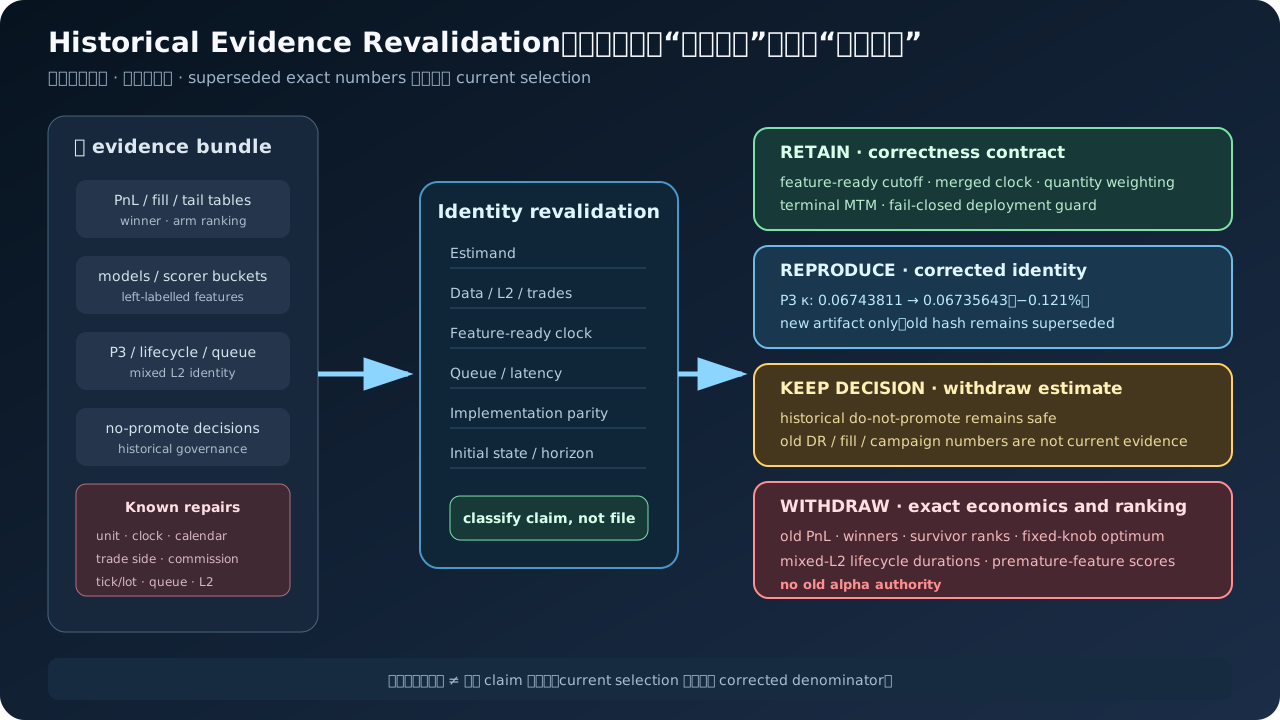
图 1:修复不会把全部历史简单归零。Correctness contract 可保留,重新复现的 shape 可降级保留,conservative no-promote decision 可继续安全;exact PnL、winner 与 rankings 则必须撤回。
图 2:历史结论是否存活,取决于它位于哪一层。单位不变量可以跨数据集保留;触及feature、event、queue或full-path outcome的数字,则必须在修复后的共同身份上重算。
1. Evidence identity 为什么比文件名重要
一个 replay claim 可以抽象为
只要其中一个维度发生 material change,旧 $\mathcal E$ 就不再自动与新 baseline可比较。即使 strategy parameter完全相同,订单是否存在、何时 cancel、是否 fill、库存生命周期 是否形成都可能改变。
SHA256 只能标识某份 bytes,不能替代 reader-accessible provenance,更不能让 superseded bytes重新获得 current authority。正确做法是把 claim 与输入、语义、source commit/manifest和权限一起绑定。
1.1 一个结果至少有六层身份
第一层是问题:估计的是touch、fill、markout、库存生命周期 value还是action uplift。第二层是观测:market data、calendar与initial state。第三层是可见性:source、receive、feature-ready与decision clocks。第四层是执行:queue、latency、cancel/ACK、fees与tick/lot。第五层是统计:split、cluster、multiplicity与scorecard。第六层才是权限:exploratory、Development、Validation、action或live。
两个文件即使参数表相同,只要其中一层不同,就不应共用一个“版本号+收益”标签。反过来,SHA完全不同的两个artifact也可能支持同一条抽象correctness不变量,例如“左标窗口必须在右边界后才可见”。Revalidation研究的核心就是按claim层级判断,而不是按文件新旧一刀切。
2. 这次 revalidation 面对哪些修复
历史链陆续确认了:
- absolute-price variance 被错误再乘 mid,单位不成立;
- quote math 使用 per-second variance,却没有显式 integration horizon;
- left-labelled feature row 在 bucket开始就暴露,造成 lookahead;
- rolling state 在 UTC midnight错误重置;
- markout half-life 名称与真实 EMA span不一致;
- markout只在 later requote解析,名义 horizon漂移;
- partial fills按 event而不是 quantity加权;
- replay clock主要由 trades推进,timer/order lifecycle在 sparse periods停滞;
- duration 与 capacity混用 active-trade seconds、event count和 wall time;
- top-level L2 identity混合不同 frequency/depth;
- calendar physical unit把 microseconds错读成 1970 dates;
- commission、daily PnL、tick/lot、bar ns/ms 与 post-fill volatility语义不完整。
这些不是 cosmetic bugs。它们改变 feature、quote、order、fill、inventory 和 report denominator,因此旧 exact economics不能靠“两个 arms 同样错”保留。
3. 四种 revalidation 分类
3.1 Retained correctness
与具体市场数值无关、且修复后仍构成必要不变量的结论可以保留。例如 feature必须在 decision前 ready;formal replay需要 merged event clock;terminal equity不能虚构 end-of-window taker close;markout要按 quantity加权;action reward不能重复 库存生命周期 outcome。
这些结论不声称哪个 strategy赚钱,只约束怎样生成可信 evidence。
3.2 Reproduced under corrected identity
某些 shape在 corrected source上重新计算后仍近似存在,可以保留新结果,但旧 artifact必须 superseded。Empirical P3 就是例子:normalized 100ms BBO上 10s $\delta\star$不变,$\kappa{eff}$仅从 0.06743811移到0.06735643。
复现的是 shape,不是旧 hash,更不是一个 PnL knob。$\kappa_{eff}$ 的单位是 inverse price distance,来自
它不是 order-arrival intensity。
3.3 Conservative decision retained, estimate withdrawn
若旧 action family 本来就 failed 或 do not promote,修复后保留“不把它上线”是安全的。可是旧 DR point estimate、fill leverage、库存生命周期 value 与 ranking不能继续当方向证据。
Fixed local actions、BUY conditional widen、SELL one-cycle skip 等历史 families 都属于这类:不晋级仍成立;若要重新研究,必须创建新的 frozen denominator和 paired current baseline,不能把旧 failure数字改名成 current evidence。
3.4 Invalid for current selection
pre-repair gamma/cap/guard/cooldown winner、historical survivor ranking、run-local arm ID、旧 exact live/replay PnL、mixed-clock BUY score buckets、cross-day snapshot修复前的 results以及 model days含 premature five-minute features 的 outputs都不得用于 current selection。
删除旧结果表不是“隐藏失败”,而是防止 reader把已知 invalid numbers继续比较。
3.5 一张可操作的判定表
| Claim 类型 | 修复是否改变输入/状态路径 | 可否保留旧数字 | 可否保留旧决策 |
|---|---|---|---|
| 量纲、因果可见性不变量 | 否,属于逻辑约束 | 不涉及数字 | 可以 |
| 在新身份下独立复现的shape | 是,但已重算 | 只能引用新数字 | 可作为弱先验 |
| 旧candidate未晋级 | 可能改变 | 不可以 | 保守的“不上线”可以 |
| winner、PnL、fill、tail排名 | 是 | 不可以 | 不可以用于当前选择 |
| live运行记录 | 描述旧process | 可作为历史事实 | 不证明corrected策略 |
这里最反直觉的是第三行。保留“不上线”并不是声称旧负效应仍真,而是权限单调性:证据失效不会自动产生更强权限。若旧研究没有授权某动作,修复后在没有新正证据前仍不能授权;但研究者也不能继续用旧点估计宣称动作确定有害。
4. Mixed L2:同一个目录名可能不是同一个数据 identity
旧 top-level BBO/L2后来确认混合 approximately one-second/top-10 与 100ms/top-20 files。文件都叫 L2,不代表 depth、frequency、sequence与 warmup contract相同。
queue、touch、fill 与 lifecycle duration依赖 event geometry。更稀的 snapshot可能错过短暂 touch、把 cancel-ahead压成不可见、改变 activation path。于是 old empirical P3 artifact、lifecycle durations和所有依赖它的 replay numbers必须撤回。
P3 后来在 normalized source上近似复现,只说明概率曲面 shape robust;旧 mixed source hash仍不能冒充新 evidence。Lifecycle audit 的“30 秒不是 full value”语义保留,5.8-minute、92.1% 等 exact values必须重建。
5. Feature clock:同一模型树也可能得到非法预测
left-labelled 10s feature row at $t$ 实际包含 $[t,t+10s)$。若 replay在 $t$ 就读取,它使用了未来十秒信息。correct contract是
后来发现三个 historical test days 的 five-minute metrics也在 interval start 暴露,而不是 bucket end。即使只影响少数 test days,blocked cross-fitting 会把受影响训练/validation information传播到多个 scorer folds,因此 causal-v4 test metrics和 BUY scorer bucket values整体撤回。
不能只删掉三天 output后保留其它 folds,因为模型和 threshold已被污染。需要 corrected feature rebuild和新的 identity。
6. Same-input parity 能证明什么
Python/C++ parity将相同 causal inputs送入两个 implementations,比较 quotes、actions、fills、inventory 与 PnL accounting。real-data window曾得到双方 2 fills、9,461 clock events、101 requotes,PnL差约 $2.2\times10^{-15}$ USDC。
另一个历史 mechanism comparison在 corrected replay与 observed process间得到 139 vs135 fills、11 vs11 breakers、decision counts约1%差异。它说明核心 state machine order接近,却不能证明 exchange queue priority、warm start、asynchronous ACK/fill或 exact terminal PnL一致。
因此 parity是 implementation gate,不是 market validity或 alpha gate。
7. 为什么 A/B delta 也会失效
常见辩护是“lookahead 或 wrong clock 同时作用于 baseline与candidate,difference会抵消”。Maker system不满足线性抵消。
一次 feature timing差异可能让一个 arm多 cancel一次;从那以后两个 arms的active orders、queue positions、fills、inventory与库存生命周期 identities都分叉。effect不是同一 outcome减一个共同 bias,而是两个不同 nonlinear trajectories:
不能当作
repair audit中,一个 full-day public-template diagnostic从 legacy trade clock的178 fills / $-0.97$ USDC变成 merged clock的184 fills / $+1.18$ USDC。它不是 alpha result,却直接反驳“timing repair不影响结果”的假设。
7.1 一个最小非线性反例
设 baseline在 $t_0$ 有一张BUY单,candidate因score略高在 $t_1$发cancel。旧trade-only clock没有在$t_1$推进timer,于是两arms都等到$t_2$的下一笔trade才处理;该trade先成交,两arms路径看起来相同,A/B delta为零。修复后的merged clock在$t_1$先处理cancel:candidate收到ACK并失去fill,baseline在$t_2$成交,库存从此分叉。
即使同一个clock defect同时存在于两arms,它也与action发生交互。共同错误项不是可以从$Y_1-Y_0$里约掉的常数,而是policy-dependent state transition。相同逻辑适用于tick rounding、queue depletion、commission asset和feature-ready:只要错误影响“哪个事件先发生”,差分结果就没有跨identity不变性。
8. 什么需要 paired rerun
只有仍值得研究的 hypothesis 才重跑。新 rerun必须在 outcomes前冻结:code/config/model/P3 identities、event-L2与 individual-trade identity、initial inventory/order/inventory_lifecycle state、strict queue、latency profile、random seeds、action probabilities和 scorecard。
如果重启 global parameter work,至少要先有 corrected strict baseline,再逐步研究 gamma、kappa/depth/cap interaction、guard、cooldown/execution,最后才考虑新的 broad search。旧 Sobol survivors不能直接带入新 baseline。
更优先的是明确 action value:一套小 candidate family、known overlap、chronological panels、paired full path和 terminal 库存生命周期 outcome。Revalidation不是邀请回到无边界参数挖掘。
8.1 重跑不是复制旧命令
真正的successor需要先写迁移清单:旧estimand是否仍值得问;输入日是否满足新source contract;feature能否按ready time重建;initial orders与inventory如何处理;candidate在新baseline上是否仍有support;旧threshold是否属于模型的一部分还是可以重新训练。任何一项变化都应得到新的research identity。
重跑报告还应同时给出“保持不变的东西”和“故意改变的东西”。前者保证paired contrast可解释,后者说明它为何是successor而非偷偷覆盖历史。若新结果方向相反,正确说法是新身份下的证据更新了结论,不是旧报告当时计算错误的数字被神奇修正。
9. 最终保留的证据集
最终留下:
- corrected accounting、time/unit/causal contracts;
- normalized source上复现的 empirical P3 shape;
- same-input Python/C++ implementation parity;
- weak但真实的 state-ranking clues;
- 若干明确 closed 的 action identities;
- fixed global knobs多在重新分配 activity、inventory与tail risk的警告。
没有留下:任何旧 result对 corrected baseline上的 profitable live action证明、任何旧 winner table、任何 pre-repair exact PnL authority。
10. 权限边界
Historical revalidation没有读取新的 Validation或 sealed holdout,没有晋级模型、action或baseline,也没有 live/deployment authority。它只改变旧 evidence应该怎样引用。
历史 operational records仍可描述旧 process当时做了什么,却不能 retroactively验证 corrected semantics。新的 current claim必须引用新 identity下的 evidence。
11. 公共证据
- Historical Backtest Evidence Revalidation
- Replay Time, Unit, and Causality Repair
- Time and Unit Contract Repair
- Legacy L2 Evidence Revalidation
公共文档保留 claim classification与聚合复现结果;superseded owner-side outputs不因仍存在于存储中而获得 current authority。
5. Formal replay identity 不是一个 config,而是一组闭合关系
很多回测争论停在“代码版本相同”“YAML 一致”或“用了同一批日期”。这些条件都必要,却不足以定义同一个 maker replay。完整身份至少可以写成:
其中 $D$ 是数据与日期,$M$ 是市场事件及其排序,$C$ 是 feature-ready 与决策时钟,$U$ 是单位/精度合同,$S_0$ 是初始 inventory、orders 与 库存生命周期 state,$Q$ 是 queue/activation/fill 机制,$L$ 是 latency/ACK 机制,$A$ 是 accounting、fee 与 mark source,$T$ 是 terminal/censoring 规则。只绑定 config 而不绑定这些字段,相当于只给实验写了标题,没有写样本、测量仪器和终点。
策略路径是递归系统:
身份中的任一元素改变,都可能先改变一次动作,再通过 $G$ 改变以后所有订单、成交和库存。回放不是逐行独立预测表,因此不能只比较两个版本最终输出的列名或日汇总是否相似。
5.1 同一日期不等于同一市场数据身份
一个 UTC 日可以来自 bar、retained BBO、native snapshot/delta、mixed L2 或 sequence-valid event book。它们可能都有相同日期文件名,却包含不同时间戳、深度、gap、bootstrap 和 warmup。只要 queue matcher 或 touch coordinate 会读取这些差异,source identity 就已经改变。
严格 source manifest 要冻结目标日、完整前一自然日 warmup、每小时覆盖、snapshot bootstrap、U/u/pu 连续性、individual trades、aggTrade parent 映射、外部 venue availability,以及被拒绝日期与原因。后来供应商补回一个缺失小时,也不能静默让旧实验多一天;那会改变 denominator、regime mix 和 fold composition。
5.2 Daily fresh start 与 continuous 库存生命周期 是不同 estimand
每日以零库存、零挂单、零 cooldown state 开始,测量的是 daily-fresh-start 策略;连续运行则把前一日 inventory、active orders、queue age、pending cancel 与 库存生命周期 state 带到下一日。设日界前状态为 $S_{d^-}$,两者分别是
如果策略有 inventory-conditioned quote、guard 或 cooldown,第一批动作就会不同。把每日结果相加不能重建 continuous path,正如把多个 one-shot fork 相加不能重建 repeated policy。
5.3 SHA 能证明字节没变,不能证明语义正确
Commit、manifest 与 artifact SHA 的作用是固定身份、阻止悄悄漂移。它们不会验证 variance 单位、feature-ready clock 或 terminal route 是否科学合法。一个 hash 完全匹配的 future feature 仍然是 lookahead;一个叫 current 的 bundle 也不会自动获得当前经济权限。
因此人类文档需要同时给出 artifact 名称、它解决的问题、是否公开、证据级别与权限。裸 hash 既不是下载地址,也不是结论。
6. 量纲闭合:数值合理不代表公式经济上合理
以 reservation price 为例。若 $s$ 的单位是 USDC/BTC,$q$ 是 BTC,$\sigma_p^2$ 是绝对价格方差率 $(\mathrm{USDC/BTC})^2/s$,$H$ 是秒,则
为了让 $q\gamma\sigma_p^2H$ 回到 USDC/BTC,$\gamma$ 必须带 $1/\mathrm{USDC}$ 的单位。若代码把库存从 BTC 改为 mBTC 或“订单单位数”,而 $\gamma$ 数值不变,报价会随 denomination 改变;这说明参数并未形成单位不变的合同。
6.1 Lookback、variance period 与 risk horizon 是三只钟
“最近 60 个 1 秒变化的方差”描述 estimator lookback。该样本若估计每秒 price-variance rate,乘 $H$ 才得到未来 $H$ 秒累计方差;若输入已经是十秒累计方差,再乘十秒就重复积分。必须分别记录:
60×1s 的统计计算可以完全正确,但固定 $H=1s$ 仍可能与 5–10 秒订单寿命、10 秒 P3、85 秒 cooldown 或数分钟 库存生命周期 风险错位。这不是“公式抄错”,而是经济期限没有闭合。
6.2 一个 denomination-invariance 测试
同一状态分别用 BTC 与 mBTC 表示。令 $q’=1000q$;若物理报价应不变,数量敏感参数必须满足
因此在其它 convention 不变时 $\gamma’=\gamma/1000$。把价格从 USDC 改成 cent 时,$s$、$\sigma^2$ 与 $\gamma$ 也要协同变换。最有力的测试不是断言一个常量“大概合理”,而是单位变换后证明 bid/ask 只发生可预期的显示换算。
6.3 订单量不能永远藏在参数里
AS/GLFT 文献常把一笔成交量规范化为 1,工程系统却使用 BTC inventory 与具体 order size。若订单量 $z$ 没有显式进入 spread 或 inventory transition,$\gamma$、$\kappa$ 与库存单位就必须说明如何吸收 $z$。否则把 order size 改一倍会同时改变库存步长与隐含风险厌恶,却没有可审计的参数变换。
6.4 Return variance 与 absolute-price variance 不能凭名字互换
若 $r_t=\Delta p_t/p_t$,return variance 无量纲;absolute-price variance 的单位是 $(\mathrm{USDC/BTC})^2$。二者在局部可通过 $p_t^2$ 近似转换:
遗漏 $p_t^2$ 会让同一波动率在 BTC 价格翻倍后仍产生相同绝对报价偏移;重复乘 $p_t^2$ 又会把风险放大四次方。ABI 应明确字段是 rate 还是 cumulative、return 还是 price、采样间隔和 annualization convention,而不是只叫 volatility。
7. 因果事件钟:没有 trade 的十秒也会发生事情
旧 trade-driven replay 容易只在成交到来时推进策略。真实系统中,即使十秒没有 trade,timer、requote、order age、cancel timeout、feature bucket close 与 库存生命周期 clock 仍然前进。事件集合应是多个流的并:
Merged scheduler 每次取下一个合法事件并更新状态,不能拿 trade_ts 代替全局时钟。若 timer 位于两笔 trade 之间,candidate 可能在该时刻 cancel,而 baseline keep;忽略 timer 后,后续 trade 的 fill attribution 已经不同。
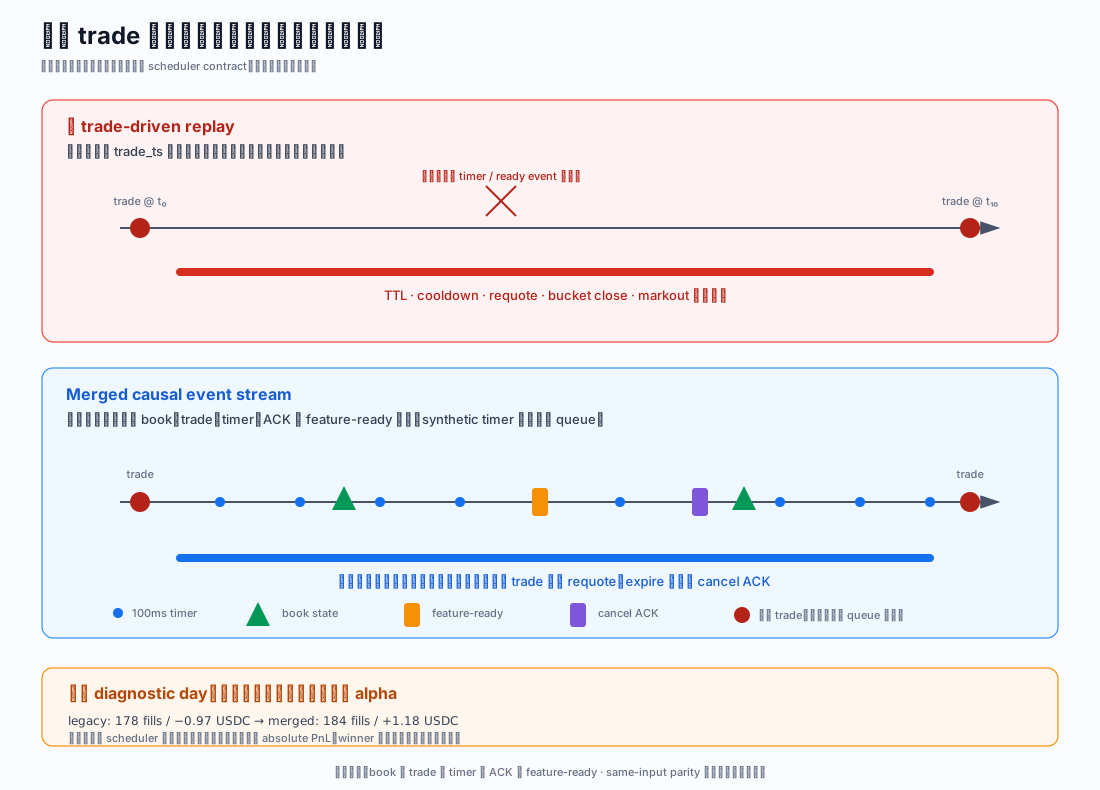
图:旧 replay 在两笔 trade 之间冻结订单生命周期;merged stream 让 book、100ms timer、feature-ready 与 cancel ACK 各自在合法时钟推进,同时禁止 synthetic timer 消费 queue 或制造 fill。
7.1 同毫秒事件不是天然有序
Trade 与 L2 update 即使共享毫秒,也未必有跨流 sequence number。把文件读取顺序当作 exchange order,会制造 queue 优势或 adverse jump 的伪先后。合法处理只有三类:来源提供共同序列时按序列排序;来源只提供 receive order 时把主张限制为该 host 的 receive-time;无法识别时 censor 或报告两种边界敏感性。
同样,cancel request 在本地策略钟发生,cancel ACK 才终止 exchange fill risk。Pending-cancel 区间仍可能成交;把 request 当 terminal 会低估 fills,把 ACK 后旧订单继续留在风险集又会高估 hazard exposure。二者方向相反,却都可能经库存反馈形成复杂 PnL 偏差。
7.2 Partial fill 是状态转移,不是重复完整订单
一张数量 $Q$ 的订单发生部分成交 $q_1$ 后,剩余风险变成
Queue position、inventory 与 fee accounting 已变化。若每个 fill row 都复制整张订单数量,会同时放大成交额、库存和 terminal PnL;若只记录最后一笔,又会丢失早期 latency 与 库存生命周期 attribution。Markout 可以按 fill slice 计算,库存生命周期 value 必须按完整现金流汇总,不能把同一 terminal PnL 复制给每个 slice。
7.3 为什么共同 bug 不会从 paired A/B 自动消失
只有误差是与策略无关的加性常数时,$Y_1+b-(Y_0+b)$ 才能消掉。Replay defect 往往进入状态转移,而且 $A_k^1\ne A_k^0$,所以两个 arm 的偏差是 $b_1\ne b_0$。
设两臂都在 bid 挂一张订单,candidate 在 $t_1$ 因 guard cancel,baseline keep;timer bug 让 cancel 延迟到 $t_2$ trade 之后。旧 replay 中两臂都先 fill,库存相同。修复后 candidate 先 ACK、baseline 后 fill,两个库存分别为 0 和正值;下一轮 reservation price、哪侧是 add/reducing、cooldown 与 库存生命周期 id 全部分叉。旧 difference 不是在新路径上加一个修正数,而是在比较两棵不同状态树。
7.4 Aggregate parity 近似不等于订单路径一致
同日 fill 数、breaker 数或 PnL 很接近,无法证明订单逐一对应。少量差异可能集中在一个长 库存生命周期,决定全天左尾;也可能是相互抵消的短 opener。需要先比较 decision IDs、quote coordinates、activation、first fill、cancel route、remaining quantity 与 库存生命周期 lineage,再解释 aggregate economics。
Python/C++ same-input lockstep 只能说明两个实现一致。如果二者共同读取未来 feature、共同缺 timer 或共同采用错误 quantity unit,它们会精确地一起错。因此 parity 是 implementation evidence,不是 estimand validity。
8. 证据迁移:什么能继承,什么必须重跑
修复后不应只有“全部作废”和“全部保留”两个选项。更精确的迁移矩阵是:
| 旧证据 | 修复后处理 | 原因 |
|---|---|---|
| 纯解析/schema 单测 | 条件保留 | 修复未改变对应字节和语义时仍有效 |
| Same-input Python/C++ parity | 保留为实现证据 | 不能扩张成经济正确性 |
| 方向性的 no-promotion 决定 | 保守保留 | 没有新证据授权旧候选 |
| Absolute PnL、winner、参数排名 | 撤回 | 依赖该实验的路径与会计定义 |
| Action A/B uplift | 通常重跑 | defect 与 action/state transition 交互 |
| Prediction score | 按 feature/label clock 判断 | ready time 或 label span 改变即失效 |
| Operational historical fact | 只保留历史描述 | 不能证明 corrected replay 或当前 live |
8.1 撤回数字不等于反向证明
旧 winner 的 PnL authority 被撤回,不代表它现在被证明为 loser;旧正点估计失效,也不等于真实效应为负。合法说法只是该数值对新 identity 不可迁移。只有修复后预冻结 paired rerun 得到新结果,才可以更新方向。
旧 no-promotion 决定可以继续作为权限状态,因为“不部署一个未获新证据支持的候选”仍然安全;但不能用旧失败数字关闭 materially different successor。治理权限和科学效应大小是两个对象。
8.2 Revalidation 不等于把所有旧 grid 重跑一遍
优先级应由当前决策价值决定:是否仍影响 baseline、是否存在未关闭问题、是否有合法 action support、重跑能否改变 owner 决策。已经在多个独立 gate 失败且没有当前消费者的 winner table,只需保留撤回记录;仍作为当前 baseline dependency 的模型或参数,才需要 strict successor reproduction。
8.3 一个可执行的 successor 合同
新的 formal replay 在读取 economics 前应完成:
- 冻结 Development、Validation、sealed holdout、embargo、D-1 warmup 与 source rejection。
- 绑定 baseline/candidate 的 code、config、model、P3、queue、latency、initial state、fees 与 random seed。
- 用 zero-economic preflight 走完所有日期/fold,证明 feature-ready、timer、ACK、partial fill、库存生命周期 lineage 与 terminal route 可完整生成。
- 在代表日做逐事件 lockstep,而不是只比日汇总。
- 证明 action 在冻结 denominator 上真实发生,报告 candidate rate、path divergence、activation、fill 与 retained activity。
- 最后才打开 assignment-to-terminal reward、tail、inventory time 与 库存生命周期 duration,并按日 cluster 不确定性。
报告还应把两类差异分开:baseline-vs-candidate 回答动作价值,old-vs-new migration diagnostic 回答修复有多 material。把两者混在一张 PnL 表里,会让读者无法区分策略变化与测量系统变化。
8.4 四种“通过”必须使用四种语言
数据完整性通过,只能写 source admitted;Python/C++ 逐事件一致,只能写 implementation parity;模型 proper score 通过,只能写 prediction supported;paired terminal reward 与 tail gate 通过,才可能写 action supported。Live authority 还需要单独的 owner admission、部署身份、rollback 与运行健康证明。把这些层统一叫“验证通过”,会让一个底层工程事实沿文档引用链不断升格,最后看起来像经济结论。
同理,“blocked”“closed”“superseded”和“withdrawn”不是同义词。Blocked 表示必要证据尚不可得;closed 表示冻结 identity 已在允许 panel 上得出停止决定;superseded 表示后来有新语义身份,但不自动反转旧结论;withdrawn 表示旧数值失去引用权限。清楚地区分这些词,正是 replay repair 能长期改善研究质量的地方。
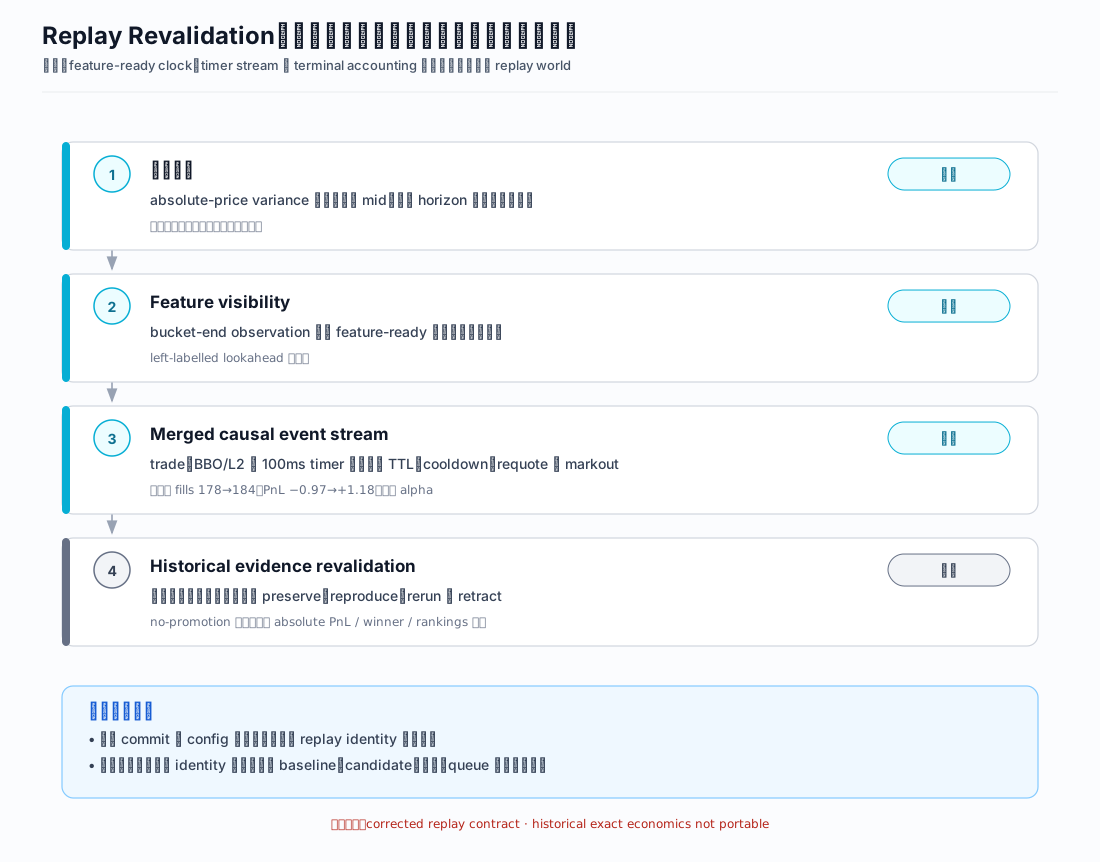
图:单位、feature-ready clock 与 merged event stream 一起改变 replay identity;旧 no-promotion 决策可保守保留,但旧绝对 PnL、winner 和排名必须撤回或重跑。
9. 结论:保守决策可以保留,精确经济数字不能跨 identity 搬运
修复后的正确结论不是“所有历史研究都毫无价值”。旧研究得出的不晋级决定仍然保守安全,因为没有新证据把它们变成通过;但旧 absolute PnL、winner、参数排名与 side attribution 依赖已经失效的 replay identity,不能继续引用。相同代码 commit、相同 config 名或共同 bug 都不足以证明 paired difference 可迁移。
未来比较必须在同一修复后 identity 内重新冻结 baseline/candidate、source manifest、initial state、timer/feature clocks、queue、fees 与 terminal accounting。Old-vs-new 只能作为 migration diagnostic,不能冒充 action A/B。真正值得继承的是已经闭合的时间、单位、事件与权限合同;它们让后续研究更难得到一个漂亮 winner,却让每个剩下的结论更接近可执行事实。